
SHOU
- Universities
- SHOU
SHANGHAI OCEAN UNIVERSITY ( SHOU )
SHOU
| Kota | : | SHANGHAI |
| Provinsi | : | SHANGHAI |
| RANKING | ||
|---|---|---|
| USNEWS | : | #1125 View |
| TIMES | : | - |
| QS | : | - |
| SHANGHAI RANK | : | - |
| EDURANK | : | #1641 View |
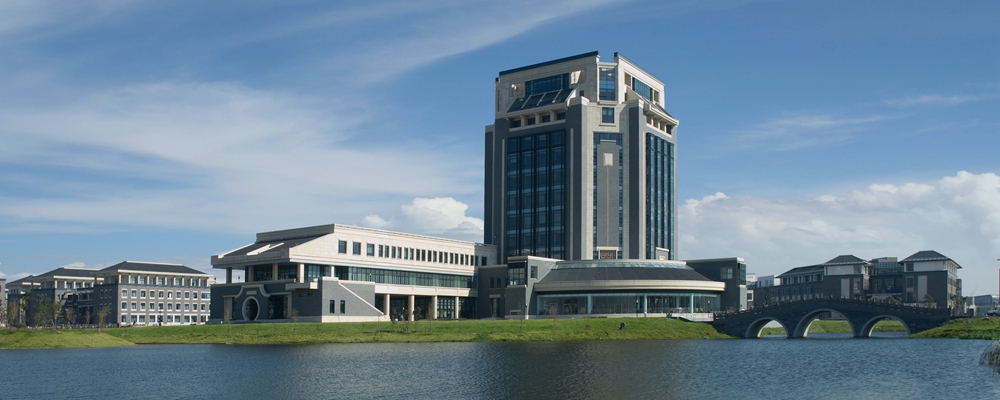
Shanghai Ocean University (SHOU)
is a multidisciplinary, applied research university, co-established by the
State Oceanic Administration, the Ministry of Agriculture and Rural Affairs,
and the Shanghai Municipal People's Government. In September 2017, it was
elected into China’s World First-Class Disciplines Project. In February 2022,
it was included on the list of the second round of Double First-Class
Initiative (i.e., world-class universities and first-class disciplines).
School motto: Diligence,
Sincerity, Dedication, and Practicality, established on September 1, 1914.
Original inspiration: Sea rights extend to the limits of fishing zones.
School-running tradition: Write the thesis on the rivers and lakes of the
motherland and the oceans and seas of the world.
The predecessor of SHOU was
Jiangsu Provincial Fisheries School founded by Zhang Jian and Huang Yanpei in
1912. Its former names include the School of Fisheries under the College of
Agriculture of National Central University, Shanghai Municipal Wusong Fisheries
Technical School, Shanghai Fisheries Technical School, etc. In 1952, it was
upgraded to Shanghai Fisheries Institute, the first undergraduate fisheries
university in China. In 1972, the institute was relocated to Jimei, Xiamen, and
renamed as Xiamen Fisheries Institute. In 1979, it was relocated back to
Shanghai and resumed its former name Shanghai Fisheries Institute, but Xiamen
Fisheries Institute was kept as well. In 1985, it was renamed Shanghai
Fisheries University. In 2008, it was renamed Shanghai Ocean University.
The university currently has 12
colleges (departments), nearly 12,000 full-time undergraduate students, and
more than 5,700 full-time graduate students. It employs a total of 1,500
teaching and administrative staff members, including more than 800 teachers and
scientific researchers, among them more than 500 with senior professional and
technical positions, 38 full-time national-level talents (nine enjoying the
State Council special allowance), and 227 provincial and ministerial-level
talents.It offers forty-four undergraduate specialties, eight national-level
first-class undergraduate specialties, fifteen municipal-level first-class
undergraduate specialties, five national-level characteristic specialties, one
specialty accredited by the Institute of Food Technologists (IFT), four
specialties accredited by German Accreditation Agency for Study Programs in
Engineering, Informatics, Natural Sciences and Mathematics (ASIIN), four
specialties accredited by China Engineering Education Accreditation Association
(CEEAA), and one specialty which has passed the “Yangtze River Delta
Certification of New Liberal Arts Specialties”.

The university has 11 national
first-class courses, 36 Shanghai municipal first-class courses, three national
excellent courses, 45 Shanghai municipal excellent courses and demonstration
courses, one national teaching team, and four Shanghai municipal teaching
teams. There are also seven Shanghai municipal curriculum ideological and
political education demonstration courses, one winner of the Award of Shanghai
Municipal Outstanding Teachers at Colleges and Universities, and four Shanghai
municipal demonstration teams. There are also two national experimental
teaching demonstration centers, three Shanghai municipal experimental teaching
demonstration centers, 179 undergraduate teaching internship bases, three
national virtual-simulation experimental teaching projects, and 13 Shanghai
municipal projects. Since 2013, the university has won one second prize of the
National Teaching Achievement Award, as well as one grand prize, nine first
prizes, and 17 second prizes of the Shanghai Teaching Achievement Award. The
university is one of the first pilot schools for the overall teaching reform of
curriculum ideological and political education in Shanghai, one of the first
demonstration universities for deepening innovation and entrepreneurship
education reform, one of the first demonstration schools for governing schools
according to law in Shanghai, and one of the first demonstration centers for
curriculum ideological and political education research in Shanghai. It has
been elected among key pilot universities for reform of curriculum ideological
and political education in Shanghai, one of the first model branches in
national university Party building, and one of the first national Dual-leader
teachers’ Party branch secretary studios in colleges and universities. The
university is also one of the first pilot units for E-Class in China, and has
successively won the grand prize of the National Excellent Achievement Award
for Campus Culture Construction in Universities and the first prize of the
Shanghai Education Reform Experiment Award. The Center for College Students’
Mental Health Research and Education has been rated as a Demonstration Center
for Mental Health Education and Counseling at Shanghai Institutions of Higher
Learning for three consecutive rounds, and has been selected as a typical case
for the Ministry of Education’s guidance on college mental health education.
The university is also known for its rich and colorful campus culture, which is
inseparable from the blossoming of more than 90 student clubs, including
cultural and sports as well as scientific and technological clubs. Notably, it
has won a gold award in the Entrepreneurship Youth China College Students’
Entrepreneurship Competition, a first prize in the Challenge Cup National
Undergraduate Extracurricular Academic Science and Technology Contest, etc.
In the past five years, the
university won two gold prizes and three silver prizes in the Odyssey of the
Mind World Finals, as well as multiple gold and silver prizes in national art
performances and over 60 awards in municipal art competitions. In addition, it
has won eight national awards in social practices under the Volunteer
Activities for the Country People program (a program under which officials,
doctors, scientists, college students go to the countryside to spread
scientific and literacy knowledge and offer medical service to farmers), and
more than 40 awards in the Knowledge and Action Cup Shanghai University Student
Social Practice Competition. The university has also built a series of museums
and educational venues, like the University History Museum (composed of the
History Museum of Traditional Disciplines, Specialties, and Courses and the
Campus Culture Exhibition Hall for College Students), the Museum (consisted of
the Science Museum of Aquatic Organisms, the Whale Museum, the Pelagic Fishery Exhibition
Hall, the Rainbow-fish Deep-sea Science Popularization and Experience Base, and
the China Fishery Administration Ship 206), etc.
At present, the university has
four Doctoral degree conferral programs in first-level disciplines, 14 Master’s
degree programs in first-level disciplines, one Master’s degree program in a
second-level discipline, eight professional Master's degree programs, and four
centers for post-doctoral studies. Besides, it has one national first-class
discipline, one national key discipline, three Summit and Plateau disciplines
in Shanghai institutions of higher learning, three first-class disciplines in
Shanghai institutions of higher learning, and nine key disciplines of
provincial and ministerial levels. Five of its disciplines (i.e., plant and
animal science, agricultural science, environment/ecology, engineering, and
biology & biochemistry) have entered the world top 1% of the Essential
Science Indicators (ESI) International Discipline Ranking. The discipline of
fisheries science has been rated A+ in the fourth and fifth rounds of national
discipline assessment. The university is also home to the FAO Center for Ecological
Aquaculture (CEA), National Engineering Technology Research Center, National
Engineering Laboratory, National Center for International Joint Research under
the Ministry of Science and Technology, National University Science Park, and
more than 30 key laboratories and platforms of provincial and ministerial
levels (including those under the Ministry of Education). Moreover, it has
built several university-level scientific research platforms, including the
Center for Aquatic Organism Breeding Research, the Research Center for Extreme
Ocean Processes and Resources, the Marine Think Tank Research Center, the
International Center for Marine Studies, the Sino-Australian Joint Research
Centre for Ocean Engineering, the International Performance Research Center for
Pelagic Fishery, and the Institute of Marine Science. Besides the first pelagic
fishery resources research vessel in China (Songhang) and the only laboratory
for ship’s ballast water testing certified by CNAS, CMA, DNV GL, and USCG in
China, it has also built Asia’s largest and the world’s third largest dynamic
water tank, and developed a 10,000 m-level lander with a depth capacity of
10,918 m.
The university also serves as a
guiding unit of the Shanghai Society of Fisheries, the Shanghai Society of Food
Science, and the Shanghai Research Society of Fishery Economy. Since 2011, it
has made multiple breakthroughs in the research fields of natural sciences and
humanities and social sciences, and won one National Award for Progress in
Science and Technology and 36 provincial and ministerial-level awards as the
first completion unit. By leveraging its disciplinary and scientific research
advantages, SHOU has achieved significant results in serving society. Since
2011, it has guided rural households in Miaoli County of Taiwan in the breeding
of hairy crabs, setting an example of cross-Straits agricultural cooperation.
The Professor & Doctor Service Group of Fishery Science and Technology, set
up to provide scientific and technological services throughout the country, has
engaged in targeted poverty alleviation in Tibet, Xinjiang, Shaanxi, Guizhou,
and other provinces, with remarkable achievements. The project has been elected
among the second and fifth batches of Typical Targeted Poverty Alleviation and
Targeted Poverty Elimination Projects at Provincial Institutions of Higher
Learning released by the Ministry of Education. The International Compliance Team
for Pelagic Fishery, which has fully undertaken
the task of fulfilling our obligations under regional fisheries management
conventions on behalf of China since the 1990s and made important contributions
to safeguarding China’s pelagic fishery rights and interests, has been selected
among the first batch of National Huang Danian-style Teacher Teams in
Institutions of Higher Learning.
Currently, the university has two
campuses, namely, the Hucheng Ring Road Campus in Pudong New Area and the
Jungong Road Campus in Yangpu District, as well as a 386 mu coastal base and a
56.7 mu Xiangshan Scientific Education Base. To be specific, the Hucheng Ring
Road Campus (the main campus) occupies a floor area of over 1,600 mu, with a
planned construction area of 586,000 m2. The university has also built its
modern campus network, and established the National Data Center for
Distant-Water Fisheries of China and the Super-computing Center for Marine
Science. The university currently has over 1.67 million paper books, nearly
1.12 million electronic books, and 106 databases. The collection resources have
highlighted its features in marine, fisheries, and food sciences. In 2016, it
sponsored Aquaculture and Fisheries, the first English journal of fisheries
science in the Chinese Mainland, which was later included by Scopus, BIOSIS
Previews (BP), Biological Abstracts (BA), and the Chinese Science Citation Database
(CSCD). The Journal of Fisheries of China and the Journal of Shanghai Ocean
University, also sponsored by the university, are Chinese core journals,
Chinese science and technology core journals, and core journals of the Chinese
Science Citation Database (CSCD). Notably, the Journal of Fisheries of China
has won the titles of China’s Top 100 Newspapers and Periodicals, China's Top
Quality Periodicals, and Top 100 Outstanding Academic Journals of China.
SHOU actively expands its
external cooperation, and has maintained close exchanges and cooperation with
colleges and universities in the US, Japan, South Korea, Germany, Portugal,
Australia, Ghana, and other countries (regions), as well as international organizations
such as United Nations Food and Agriculture Organization (UNFAO) and the Asian
Fisheries Society (AFS), and concluded cooperation agreements with more than
140 overseas institutions of higher learning as well as research institutions.
Since 2011, it has dispatched over 4,000 students abroad through the channels
of study tours, overseas study, exchange programs, and so forth; has been
elected as an Asian Campus among China, Japan, and South Korea for two
consecutive sessions; has obtained approval for projects such as the
International Cooperative Training Programs for Innovative Talents under the
China Scholarship Council; and has launched the Erasmus program of mutual
recognition of credits with institutions of higher learning in Spain, Portugal,
etc. By these means, the university provides a series of platforms for Chinese
and foreign teachers and students to further expand their international vision,
cultivate international communication skills, and strengthen international
competitiveness.
The development goal of the
university for the new era is to turn into a high-level characteristic
university with important international influence by 2035. By the middle of
this century, the university will have become a world-class characteristic university.
Featured Program
| COURSE NAME | SUGGESTION SUBMISSION | INTAKE | DURATION | LANGUAGE MEDIUM | TUITION FEE | ACTION | SAVE FOR LATER |
|---|---|---|---|---|---|---|---|
| AQUACULTURE | APR-MAY | AUTUMN | 4 Years | CHINESE | RMB 20,000 | ||
| BIOLOGICAL SCIENCE | APR-MAY | AUTUMN | 4 Years | CHINESE | RMB 20,000 | ||
| MARINE FISHERY SCIENCE AND TECHNOLOGY | APR-MAY | AUTUMN | 4 Years | CHINESE | RMB 20,000 | ||
| MARINE RESOURCES AND ENVIRONMENT | APR-MAY | AUTUMN | 4 Years | CHINESE | RMB 20,000 | ||
| MARINE SCIENCE | APR-MAY | AUTUMN | 4 Years | CHINESE | RMB 20,000 | ||
| FOOD SCIENCE AND ENGINEERING | APR-MAY | AUTUMN | 4 Years | CHINESE | RMB 20,000 | ||
| INTERNATIONAL ECONOMICS AND TRADE | APR-MAY | AUTUMN | 4 Years | CHINESE | RMB 20,000 | ||
| MECHANICAL DESIGN MANUFACTURING AND AUTOMATION | APR-MAY | AUTUMN | 4 Years | CHINESE | RMB 20,000 | ||
| ELECTRICAL ENGINEERING AND AUTOMATION | APR-MAY | AUTUMN | 4 Years | CHINESE | RMB 20,000 | ||
| ROBOTICS ENGINEERING | APR-MAY | AUTUMN | 4 Years | CHINESE | RMB 20,000 | ||
| ENGLISH LANGUAGE AND LITERATURE | APR-MAY | AUTUMN | 4 Years | CHINESE | RMB 20,000 |
| COURSE NAME | SUGGESTION SUBMISSION | INTAKE | DURATION | LANGUAGE MEDIUM | TUITION FEE | ACTION | SAVE FOR LATER |
|---|---|---|---|---|---|---|---|
| APPLIED ECONOMICS | APR-MAY | AUTUMN | 3 Years | CHINESE | RMB 25,000 | ||
| AQUACULTURE | APR-MAY | AUTUMN | 3 Years | ENGLISH | RMB 31,000 | ||
| BIOLOGICAL SCIENCE | APR-MAY | AUTUMN | 3 Years | ENGLISH | RMB 31,000 | ||
| FISHERY RESOURCES | APR-MAY | AUTUMN | 3 Years | ENGLISH | RMB 31,000 | ||
| MARINE SCIENCE | APR-MAY | AUTUMN | 3 Years | ENGLISH | RMB 31,000 | ||
| FOOD SCIENCE AND ENGINEERING | APR-MAY | AUTUMN | 3 Years | ENGLISH | RMB 31,000 | ||
| FISHERY ECONOMICS AND MANAGEMENT | APR-MAY | AUTUMN | 3 Years | ENGLISH | RMB 31,000 | ||
| MACHINERY | APR-MAY | AUTUMN | 3 Years | ENGLISH | RMB 31,000 |
| COURSE NAME | SUGGESTION SUBMISSION | INTAKE | DURATION | LANGUAGE MEDIUM | TUITION FEE | ACTION | SAVE FOR LATER |
|---|---|---|---|---|---|---|---|
| AQUACULTURE | APR-MAY | AUTUMN | 4 Years | ENGLISH | RMB 35,000 | ||
| BIOLOGY | APR-MAY | AUTUMN | 4 Years | ENGLISH | RMB 35,000 | ||
| FISHERY RESOURCES | APR-MAY | AUTUMN | 4 Years | ENGLISH | RMB 35,000 | ||
| MARINE SCIENCE (COLLEGE OF OCEANOGRAPHY AND ECOLOGICAL SCIENCE) | APR-MAY | AUTUMN | 4 Years | ENGLISH | RMB 35,000 | ||
| FOOD SCIENCE AND ENGINEERING | APR-MAY | AUTUMN | 4 Years | ENGLISH | RMB 35,000 | ||
| FISHERY ECONOMICS AND MANAGEMENT | APR-MAY | AUTUMN | 4 Years | ENGLISH | RMB 35,000 | ||
| MARINE SCIENCE (COLLEGE OF ENGINEERING SCIENCE AND TECHNOLOGY) | APR-MAY | AUTUMN | 4 Years | ENGLISH | RMB 35,000 |
Entry Requirement
No Data Available
FEE STRUCTURE
Tuition Fee
BACHELOR
RMB 20,000
MASTER
RMB 25,000 to RMB 31,000
DOCTORAL
RMB 35,000
Other Fees
Application Fee
RMB 400
Insurance Fee
RMB 800
Medical Check Up
RMB 600 Per Examination
Residence Permit
RMB 400 to RMB 800 Per Year
Living Expense
RMB 2,500 to RMB 3,000 Per Month
Accomodation Fee
International Student Apartment No. 1
RMB 6,600 to RMB 13,200
International Student Apartment No. 2
RMB 10,000 to RMB 20,000
International Student Apartment No. 3
RMB 7,500 to RMB 15,000
| ROOM TYPE | PRICE | PHOTO | NOTE |
|---|---|---|---|
| Single Room | RMB 13,200 | Per Year / Per Person | |
| Double Room | RMB 6,600 | Per Year / Per Person |
| ROOM TYPE | PRICE | PHOTO | NOTE |
|---|---|---|---|
| Single Room | RMB 20,000 | Per Year / Per Person | |
| Double Room | RMB 10,000 | Per Year / Per Person |
| ROOM TYPE | PRICE | PHOTO | NOTE |
|---|---|---|---|
| Single Room | RMB 15,000 | Per Year / Per Person | |
| Double Room | RMB 7,500 | Per Year / Per Person |